
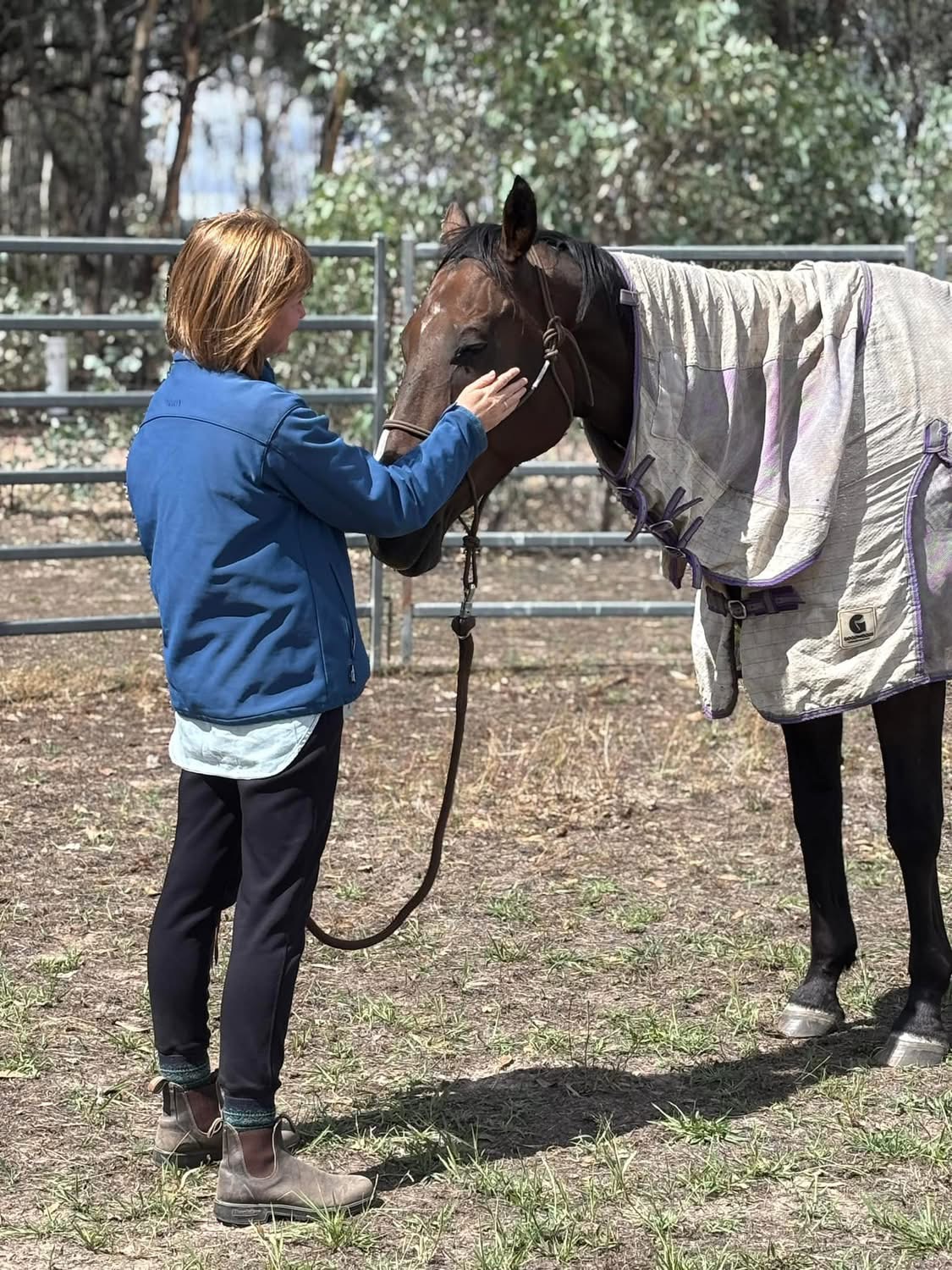
One of the most common questions I’m asked about equine reiki is “How does equine reiki actually work?”
People are often curious because a reiki session with a horse looks very different to bodywork or hands-on therapies we’re used to seeing.
The short answer is: the horse leads the entire session.
Horses are incredibly sensitive, intuitive beings. Because of this, reiki is never pushed, forced, or imposed on them in any way. Instead, the session unfolds at their pace, guided by their nervous system, their energy, and their consent.
A Horse-Led Process
A reiki session with a horse usually begins without physical contact. I spend time quietly channeling reiki from a distance, allowing the horse to become aware of the energy and decide how — or if — they would like to engage.
It’s very common for this phase to take time.
Sometimes it can be 20–30 minutes before a horse chooses to approach. This isn’t resistance — it’s discernment. Horses need to feel safe, regulated, and ready.
When a horse does approach, it’s always intentional.
How Horses Receive Reiki
When a horse is ready to receive hands-on reiki, they will usually make it very clear where they want the energy.
Many horses will:
- Place a specific part of their body directly into my hands
- Lean or gently push against my hands
- Adjust their position until it feels “right” to them
This is one of the most incredible parts of equine reiki — the horse shows us exactly what they need, without words.
Signs of Release and Relaxation
During a session, it’s common to see visible signs that the horse is processing and releasing tension or stored energy. These can include:
- Yawning
- Deep sighs or air blow-outs
- Licking and chewing
- Lowering of the head
- Shifting weight or softening through the body
- Relieving their bowels
All of these are normal and welcome signs that the nervous system is settling and the body is letting go.
Sometimes, to an outside observer, it may look like “not much is happening” — but this couldn’t be further from the truth. Much of the work takes place internally, on subtle yet powerful levels.
Knowing When the Session Is Complete
Just as the horse initiates the session, they also let me know when it’s finished.
I’m usually guided by a strong intuitive sense that the work is complete, and the horse will often confirm this physically — for example, by:
- Stepping away
- Turning their body
- Walking calmly toward a gate or exit
The session ends when the horse is done — not when a clock runs out.
Messages From the Horse
At the end of each session, I always ask if the horse has any messages they’d like to share with their human.
Sometimes a clear message comes through, sometimes it doesn’t — and that’s completely okay. The asking itself is part of honouring the horse’s voice and autonomy.
How Reiki Can Support Horses
Reiki can be a gentle yet powerful support for horses experiencing:
- Physical discomfort or recovery from injury
- Emotional stress or anxiety
- Behavioural or mood changes
- Fatigue or burnout in working horses
- The need for deep rest, reset, and rebalancing
Because reiki works holistically, it supports the horse as a whole — body, mind, and energy — rather than targeting symptoms alone.
A Quiet, Respectful Partnership
Equine reiki is not about doing something to a horse.
It’s about creating a calm, respectful space where the horse feels safe to receive exactly what they need.
Every session is different. Every horse is different. And each one teaches me something new.